
Stan Hugill: The Last Working Shantyman
Who was Stan Hugill?

Stanley James Hugill (19 November 1906 – 13 May 1992) was a British sailor, maritime historian, folk performer, painter, and author — known throughout his life as the "Last Working Shantyman" and described as the "20th-century guardian of the tradition." He was the last man to serve professionally as a shantyman aboard a working sailing ship, and almost single-handedly ensured that the sea shanty tradition survived into the modern era.
His life spanned two worlds that rarely overlap: the final years of the age of commercial sail, and the 20th-century folk music revival. He sailed on ships that hoisted canvas by hand and sang shanties as working tools, then lived long enough to perform those same songs to packed festival audiences on two continents and to see a new generation fall in love with maritime music.
Early life and the sea
Hugill was born in Hoylake, Cheshire, England, a coastal town on the Wirral Peninsula, to Henry James Hugill and Florence Mary Hugill. He first went to sea in 1922 at the age of sixteen, beginning a maritime career that would span 23 years and take him across every major ocean.
State Library of Queensland. Public domain.
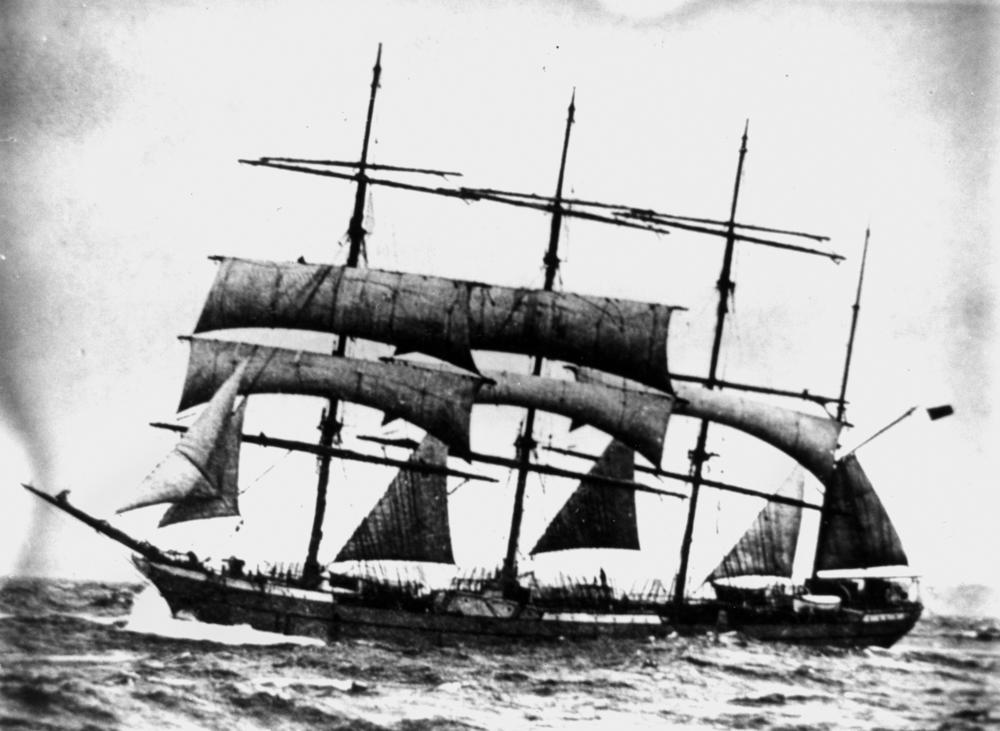
The defining moment of his sailing years came on 11 November 1929 when he served as the official shantyman aboard the Garthpool — a steel four-masted barque and the last British commercial sailing ship, known as a "Limejuice Cape Horner." The Garthpool was wrecked off the Cape Verde Islands on her final voyage, and Hugill was present for the end of an era. It was the last occasion in British maritime history that a professional shantyman sang at sea in service of the work.
As shantyman, Hugill occupied a privileged position aboard ship. A skilled shantyman was, as he later wrote, "excused all work save light or odd jobs" — his job was to lead the songs that synchronised the crew's labour, improvising new verses as the work demanded, keeping the men's rhythm and spirits up through hours of hauling and heaving. A good shantyman, as the saying went, was worth his weight in gold.
War and captivity
Public domain.
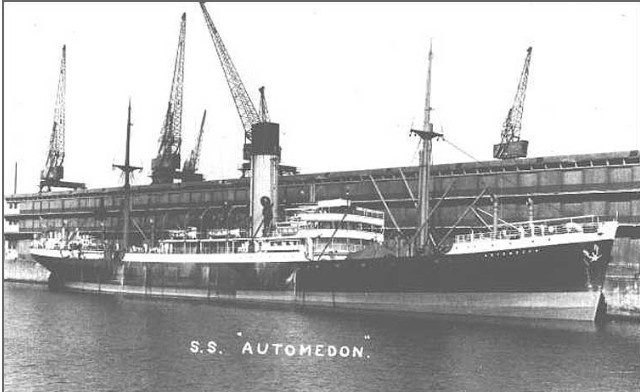
By 1940 Hugill was working as a helmsman on merchant steamers. On 11 November 1940 — exactly eleven years after the Garthpool wreck — he was aboard the SS Automedon when she was intercepted and sunk by the German auxiliary cruiser Atlantis in the Indian Ocean. The Automedon was carrying classified mail for the Far East Command, including documents detailing the strength of British forces and the defences of Singapore — intelligence that would prove catastrophic when it fell into Japanese hands via the Germans.
Hugill survived the sinking and was taken prisoner. He spent four and a half years as a prisoner of war, a period that interrupted but did not extinguish his connection to the sea and its songs. He was eventually repatriated when the war ended in 1945, closing his career as an active merchant sailor.
Life ashore: teaching and writing
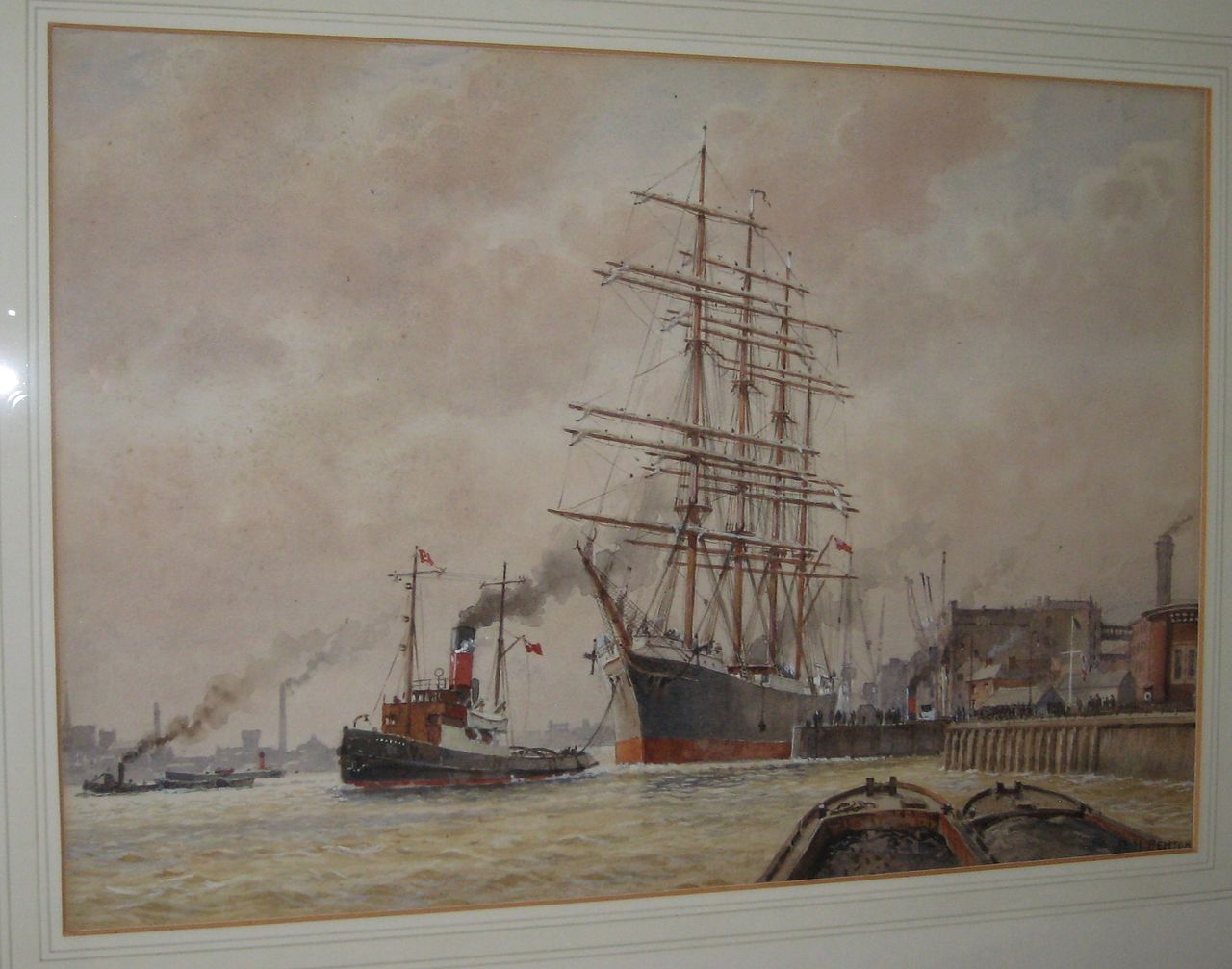
Painting by Richard Howard Penton.
Public domain.
After the war, Hugill joined the Outward Bound Sea School in Aberdyfi (Aberdovey), Wales, where he worked as a sailing instructor from 1950 to 1975. During the 1950s he also taught sailing aboard the training ship Pamir — fortunately departing before that vessel's tragic loss in a North Atlantic hurricane in 1957.
He was a remarkable linguist: fluent in Japanese and Spanish, and conversant in Maori, Malay, Chinese, and several Polynesian dialects — languages accumulated across decades of sailing to every corner of the world. He worked as a Japanese translator from 1951 to 1959, and was also a talented painter of nautical scenes throughout his life.
It was a broken leg in the 1950s that gave him the enforced stillness to begin writing down the shanties he had carried in his memory for decades. His brother, who was not a sailor but had a keen musical ear and played fiddle, piano, and mandolin, helped him set down the words and music. The result, published in 1961, was Shanties from the Seven Seas — a work that would define his legacy.
Shanties from the Seven Seas
Shanties from the Seven Seas, published by Routledge and Kegan Paul in 1961, is the largest and most comprehensive collection of sea shanties ever assembled. It contains more than 400 songs, along with detailed histories, variant texts, notes on how each was used at sea, and Hugill's own commentary drawn from lived experience. No other shanty collection comes close to it in scope or authority.
What set Hugill apart from previous collectors was that he had not researched shanties from a library — he had sung them as a working tool aboard sailing ships. As one review put it, he was "no deskbound scholar researching a topic through second- and third-hand resources. He was a sailor and a shantyman, making his living from the ocean as long as his kind of worker was still needed." Every song in the book came filtered through that direct experience.
Throughout the book — and indeed throughout his life — Hugill used the spelling "shanty" and "shantyman" exclusively, rejecting the alternative "chantey" that appeared in some American collections. This was not pedantry but conviction: shanty was the word he had heard at sea, and shanty was the word he used.
An abridged edition appeared in 1984. The book has remained continuously in print and is still regarded as the essential reference work on the subject — the starting point for anyone who wishes to understand sea shanties seriously.
Folk revival and performance
The British folk revival of the 1960s provided Hugill with a second audience. He became a regular performer at folk clubs, festivals, and events, bringing the genuine working shantyman's voice to a generation that had grown up knowing shanties only as entertainment rather than labour. He anchored a BBC television programme, Dance and Skylark, in the 1960s, which featured him alongside The Spinners as "Bosun Stan Hugill."
He also recorded several albums in collaboration with a Merseyside folk group called Stormalong John — the group taking their name from the legendary mythical sailor celebrated in one of the shanty tradition's most solemn songs. See the Stormalong lyrics page for the full text of that shanty.
In later life he became a sought-after performer at American festivals of sail — crossing the Atlantic by air to sing on replica 19th-century clippers afloat in New England harbours. He was reportedly in awe of the scale of these events, lamenting that nothing comparable existed in Britain. A member of Stormalong John recalled travelling to Kraków, Poland, with Hugill when the shantyman was in his eighties, and watching him hold an audience of more than a thousand young people spellbound.
Legacy
Stan Hugill died on 13 May 1992 in Aberystwyth, Wales, aged 85. The Guardian obituary called him "the old man of the sea shanty."
Since 1993, the Stan Hugill Memorial Trophy has been awarded to the winner of the Tall Ships' Crews Shanty Competition — a fitting tribute to a man who spent his life insisting that shanties belonged to working sailors and not merely to concert halls.
His name appears throughout this site because it is almost impossible to write seriously about sea shanties without invoking him. The definitions of characters like Stormy, Ranzo, and Santy Anna in the glossary draw on his research. The histories of shanties like Blow the Man Down, Shenandoah, and Rio Grande are understood largely through his work. When the 2021 TikTok revival sent millions of new listeners toward the shanty tradition, the tradition they found had been preserved, documented, and explained primarily by one man with a broken leg and a lifetime of songs in his memory.
Key works by Stan Hugill
Shanties from the Seven Seas (Routledge and Kegan Paul, 1961; abridged 1984) — the definitive shanty collection, over 400 songs.
Sailor Town (1967) — a portrait of the sailor's world ashore.
Shanties and Sailors' Songs (1969) — a companion volume to the Seven Seas collection.
Sea Shanties (1977) — a shorter illustrated introduction.
The Bosun's Locker: Collected Articles 1962–1973 (Heron Publishing, 2006) — essays and journalism from the folk revival years.
Explore the shanty tradition
If Hugill's work has sent you looking for the shanties themselves, this site has you covered. The shanty types page explains the six categories of working shanty. The glossary covers the nautical vocabulary. And the lyrics pages give you the full words to sing.